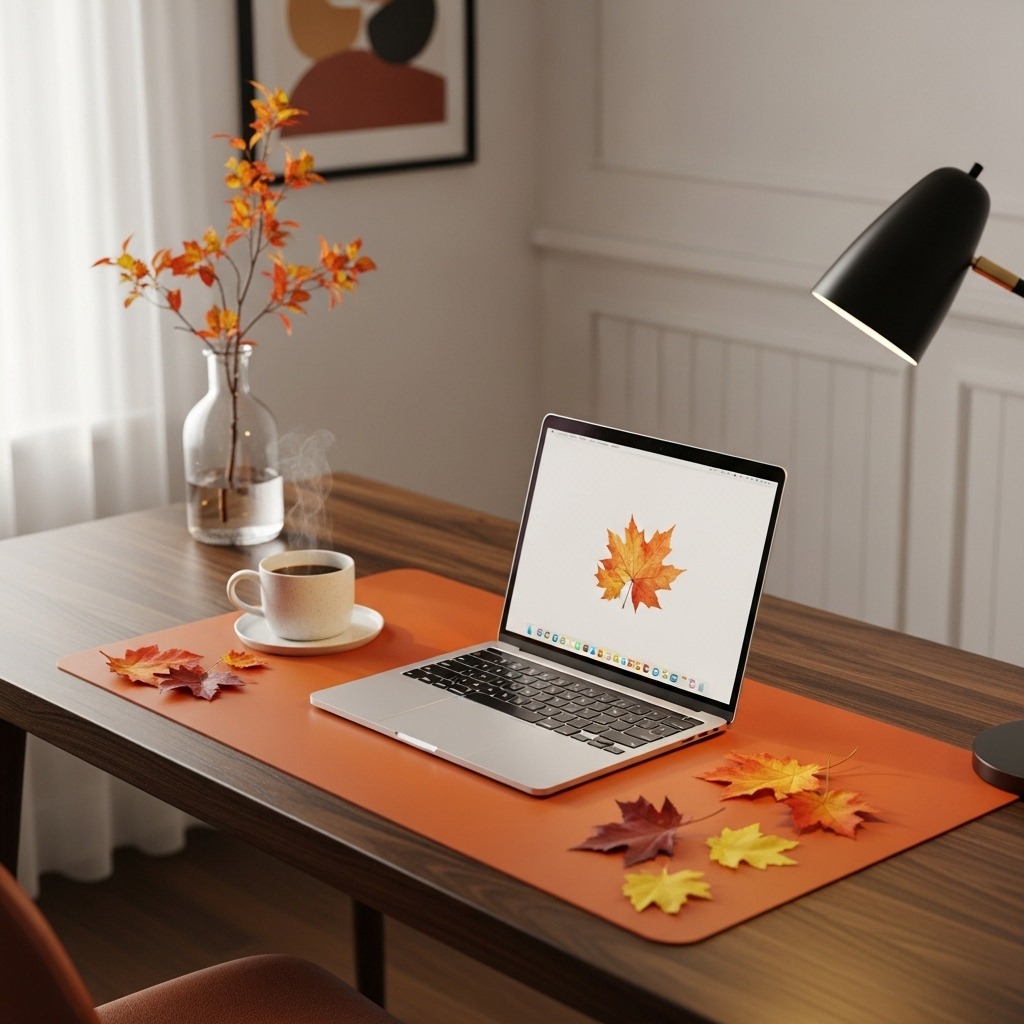
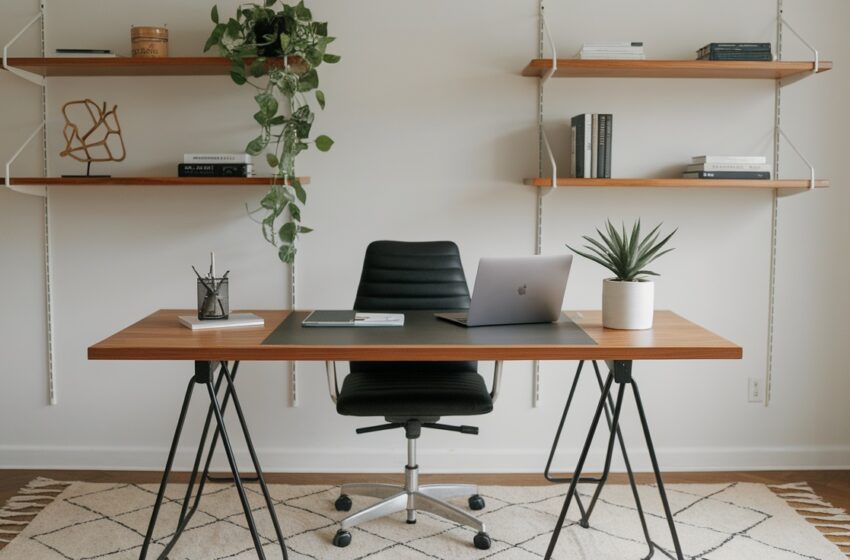
A well-designed corporate workspace is more than just desks and chairs—it’s a strategic element that can improve productivity, collaboration, and employee satisfaction.
Thoughtful workspace design also reflects a company’s brand and values, creating a professional and inspiring environment.
Here are 14 corporate office design workspace ideas to transform any office into a functional and stylish workplace.
1. Open-Plan Workspace
Open-plan workspaces foster communication and collaboration by reducing physical barriers.
Large shared areas with desks arranged in clusters encourage teamwork while allowing managers to supervise easily.
Incorporating plants, partitions, and flexible seating ensures both collaboration and focus.
2. Private Office Workspace
Private offices offer employees quiet and focused work areas.
These spaces are ideal for executives or roles requiring confidentiality.
High-quality furniture, sufficient storage, and personalized décor make private workspaces both functional and comfortable.
3. Collaborative Workspace Zones
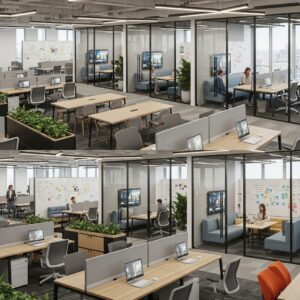
Dedicated collaborative zones within the office, such as huddle rooms or breakout areas, allow teams to brainstorm and share ideas without disturbing other employees.
Whiteboards, writable walls, and flexible seating enhance creativity and productivity.
4. Standing Desk Workspaces
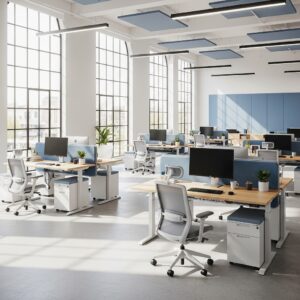
Incorporating height-adjustable desks promotes ergonomic health and reduces the negative effects of prolonged sitting.
These workspaces improve posture, circulation, and energy levels while giving employees flexibility in how they work.
5. Technology-Integrated Workspaces
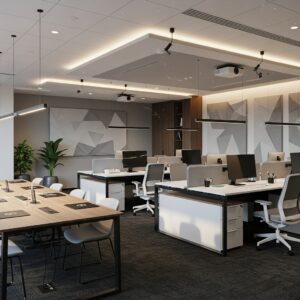
Modern corporate workspaces integrate technology to streamline workflows.
Dual monitors, docking stations, wireless charging, video conferencing tools, and smart desks enhance productivity and create a tech-forward environment.
6. Modular and Flexible Workspaces
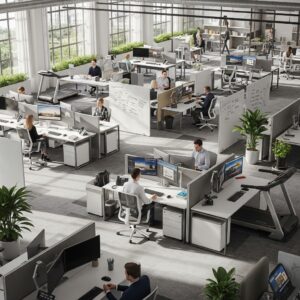
Modular furniture allows workspaces to adapt to changing needs.
Movable desks, partitions, and seating arrangements make it easy to reconfigure the office for new teams, projects, or growth without expensive renovations.
7. Biophilic Workspaces
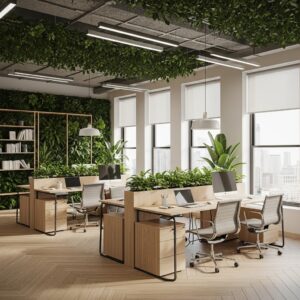
Incorporating natural elements, such as indoor plants, green walls, and natural lighting, creates a calming and healthy work environment.
Biophilic workspaces improve employee well-being, reduce stress, and enhance overall productivity.
8. Creative Workspace Interiors
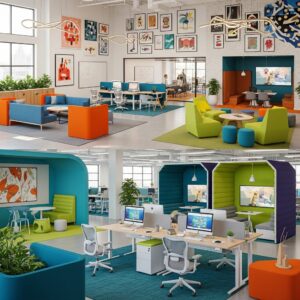
For companies in creative industries, vibrant, playful workspaces can stimulate innovation.
Bold colors, dynamic furniture layouts, open walls for artwork, and interactive areas encourage creative thinking and a lively office atmosphere.
9. Quiet Focus Areas
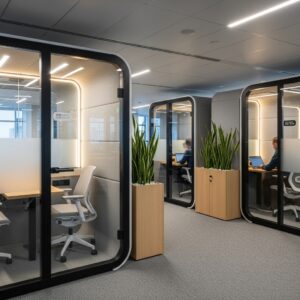
Designating quiet zones or focus rooms is essential for tasks requiring concentration.
Soundproof pods, minimal décor, soft lighting, and comfortable seating provide employees with a space to work without distractions.
10. Executive Workspace Design
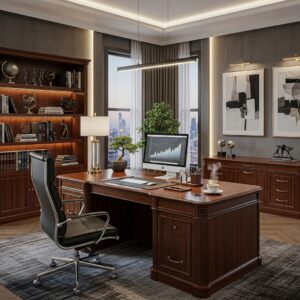
Executive workspaces combine functionality with prestige.
Large desks, ergonomic chairs, ample storage, and premium materials reflect leadership roles.
Adding personal touches and branded elements reinforces company identity.
11. Team-Based Workspace Layouts
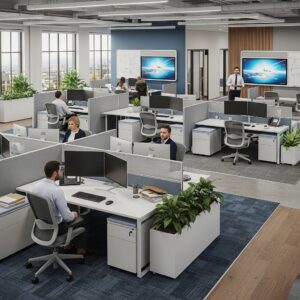
Grouping employees by team or project ensures effective communication and collaboration.
Shared desks, collaborative tools, and clear zone separation help teams work efficiently while maintaining organization in the office.
12. Hot-Desking Workspaces
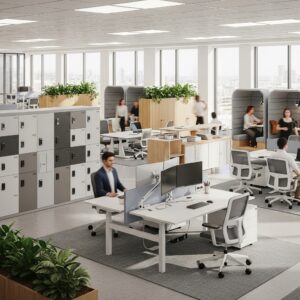
Hot-desking allows employees to use any available desk rather than being assigned a permanent workstation.
This flexible approach is ideal for dynamic or remote-friendly workplaces.
Incorporating lockers and clear desk policies keeps the space organized.
13. Lounge and Informal Workspaces
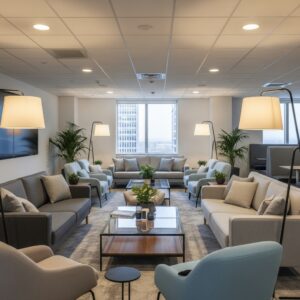
Casual lounge areas with comfortable seating, coffee tables, and soft lighting provide informal workspaces.
These spaces encourage informal meetings, brainstorming sessions, or a relaxed change of scenery from traditional desks.
14. Ergonomic Workspace Design
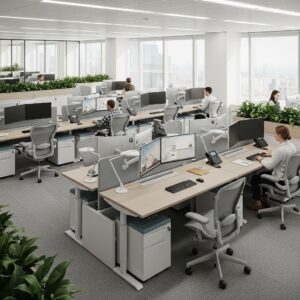
A focus on ergonomics ensures workspaces support health and efficiency.
Adjustable chairs, proper monitor height, keyboard and mouse placement, and task lighting reduce strain, prevent injury, and boost overall comfort for employees.
These 14 corporate office design workspace ideas balance aesthetics, functionality, and employee well-being.
By integrating collaboration zones, ergonomic furniture, technology, and flexible layouts, companies can create productive and inspiring work environments that leave a lasting impression on both employees and visitors.