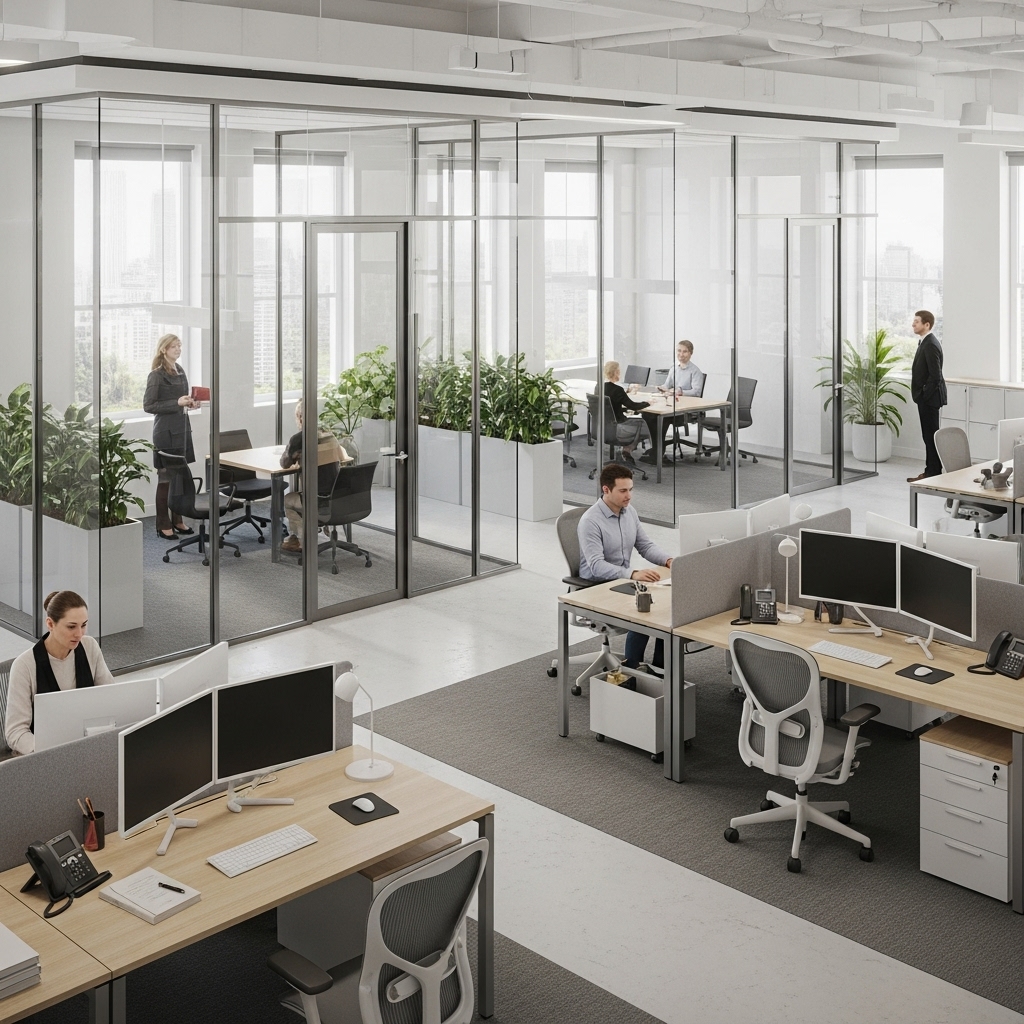
Executive offices are more than just a place to work—they reflect leadership, professionalism, and corporate culture.
Designing an executive space requires a balance of style, functionality, and comfort.
Here are 14 corporate office design ideas for executives.
1. Modern Luxury Office
A modern luxury executive office combines sleek furniture, high-quality materials, and state-of-the-art technology.
Leather chairs, glass desks, and metallic accents create an air of sophistication.
This design emphasizes elegance while providing functionality for day-to-day executive tasks.
2. Private Glass-Enclosed Offices
Glass walls offer transparency while maintaining privacy.
Executive offices with floor-to-ceiling glass panels allow natural light to flow throughout the office, while still giving the executive a private, quiet space for focused work and confidential meetings.
3. Minimalist Executive Workspace
Minimalism reduces distractions and emphasizes clean lines.
A minimalist executive office features neutral tones, streamlined furniture, and uncluttered surfaces.
It conveys professionalism and keeps the focus on productivity and decision-making.
4. Classic Wood Office
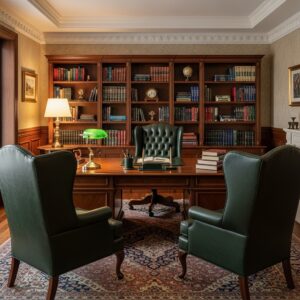
Traditional executive offices often use wood paneling, hardwood floors, and classic furnishings.
Rich mahogany desks, bookshelves, and leather seating exude authority and timeless elegance, making it perfect for leaders who appreciate a refined, classic look.
5. Biophilic Executive Office

Incorporating natural elements creates a calm and inspiring environment.
Indoor plants, natural wood, and water features can reduce stress and improve focus.
A biophilic executive office connects the leader to nature while maintaining a polished, professional aesthetic.
6. Open-Concept Executive Suite
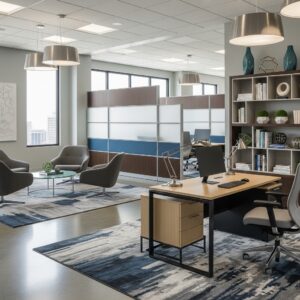
Some executives prefer an open suite layout connected to team spaces.
This allows collaboration while keeping an executive’s area distinct.
Modular furniture and movable partitions help balance openness with privacy, creating a flexible and modern executive environment.
Also check: 14 Corporate office design workspaces desks
7. Tech-Enabled Smart Office
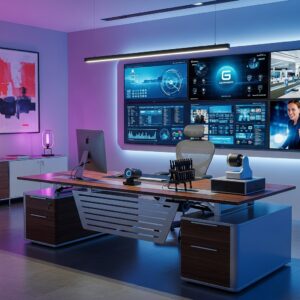
Smart executive offices include integrated technology for meetings, presentations, and remote work.
Features like automated lighting, voice-controlled devices, smart screens, and video conferencing setups streamline operations and enhance productivity.
8. Artistic and Creative Spaces
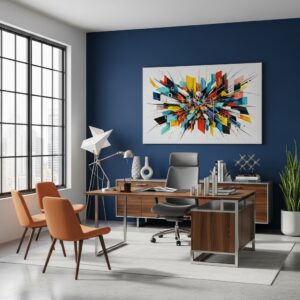
Executive offices can incorporate artwork, sculptures, or creative décor to inspire innovation.
Custom artwork, accent walls, or statement furniture adds personality while maintaining professionalism, making the space unique and memorable.
9. Comfortable Lounge Area

A dedicated lounge area within an executive office provides a space for relaxation or informal meetings.
Plush seating, coffee tables, and ambient lighting make the office welcoming for visitors and create a versatile environment for work or discussion.
10. Executive Meeting Nook
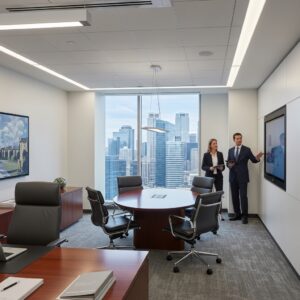
Some offices feature a small, intimate meeting space inside the executive office.
This can include a round table, comfortable chairs, and technology for presentations.
It’s ideal for private discussions with team members or high-level clients.
11. Statement Lighting
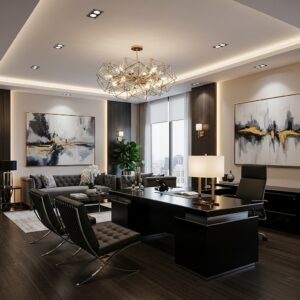
Lighting can define an executive office.
Designer chandeliers, pendant lighting, or modern LED fixtures highlight the room’s style while providing functional illumination.
Layered lighting enhances both aesthetics and productivity.
12. Accent Colors and Branding

Incorporating subtle branding or accent colors reinforces corporate identity.
This could include wall colors, décor elements, or furniture in company colors.
It adds cohesion and strengthens the professional environment without overwhelming the space.
13. Wellness-Focused Design
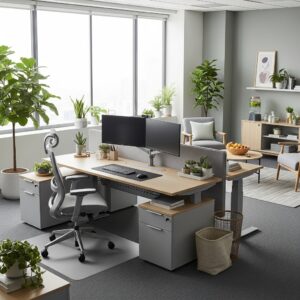
Executives benefit from offices that promote well-being.
Ergonomic furniture, standing desks, or a small exercise corner encourages physical health.
Access to natural light and quiet zones supports mental clarity and decision-making efficiency.
14. Executive Library and Display Shelves
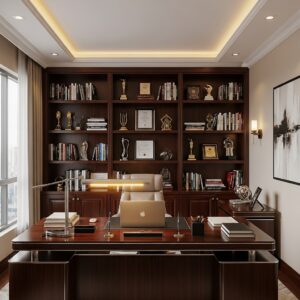
Adding bookshelves or display areas adds sophistication and functionality.
Executives can showcase books, awards, or achievements, creating an inspiring environment.
This design balances prestige with practicality and encourages a culture of learning.
Executive offices should reflect leadership, professionalism, and functionality.
By blending modern technology, luxurious materials, and wellness-focused design, companies can create executive spaces that inspire productivity, creativity, and authority.