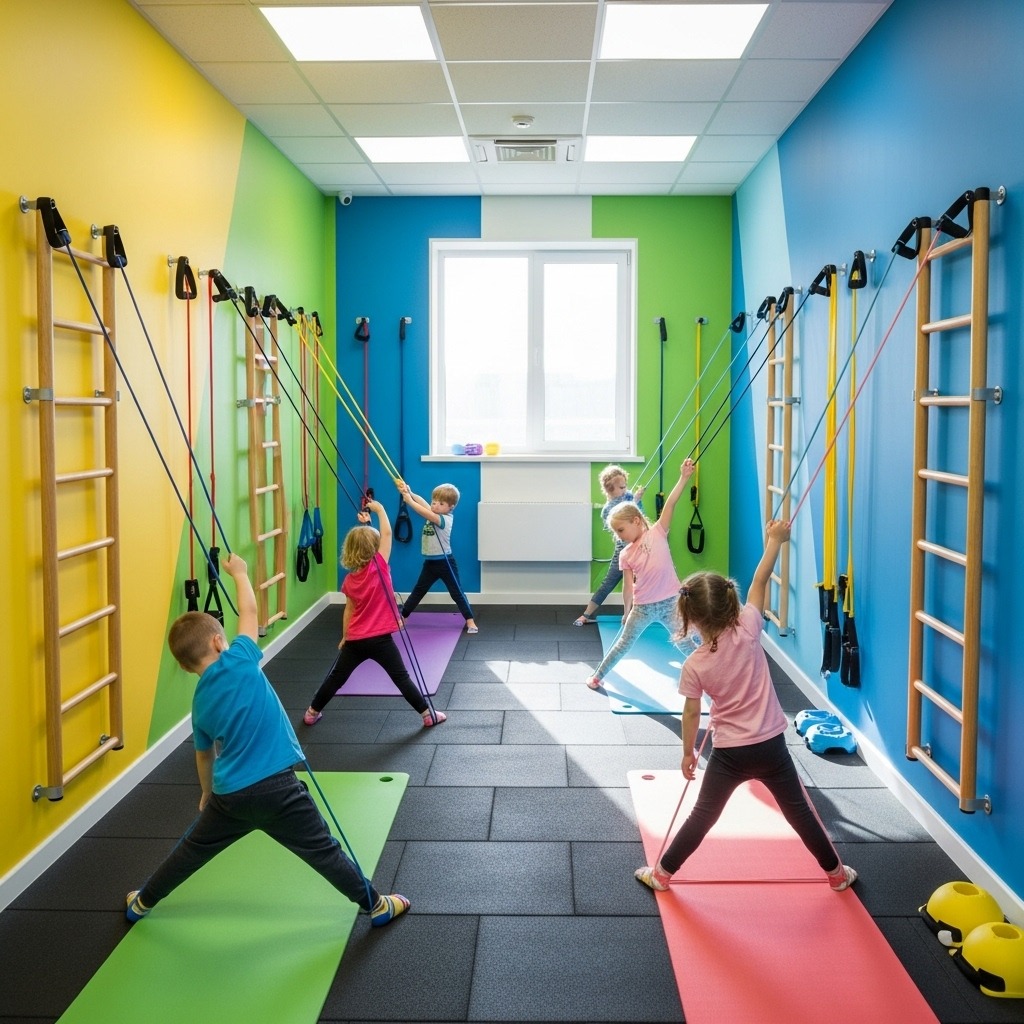
Transforming a basement into a functional gym can be a practical solution for maximizing unused space while creating a dedicated area for fitness.
Although basements are often overlooked, with proper planning and design, they can be converted into an efficient and inviting workout environment.
Here are fourteen small gym room ideas specifically for basements.
1. Create a Compact Functional Zone Layout

Finally, organizing the basement into functional zones ensures maximum efficiency.
Designate areas for cardio, strength training, stretching, and storage.
This structured approach allows multiple activities to coexist without overcrowding, giving the small basement gym a professional and well-planned appearance.
2. Use Foldable or Multi-Functional Equipment
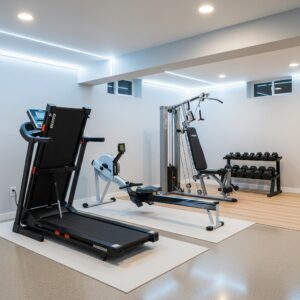
Space in basement gyms is often limited, making foldable or multi-functional equipment essential.
A foldable treadmill, a compact rowing machine, or a multifunctional weight bench allows for a full-body workout without overcrowding the area.
These tools can be stored away when not in use, keeping the gym organized and spacious.
3. Maximize Natural Light with Mirrors
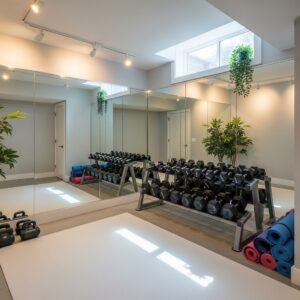
Basements often suffer from a lack of natural light, making the space feel dim and confined.
Installing large mirrors on one or more walls not only enhances the lighting but also creates the illusion of a bigger room.
Mirrors are particularly useful for checking form during exercises such as squats or lunges, adding both functionality and aesthetic appeal to the gym.
Also check: 14 Small Gym Room Ideas for Outdoor Spaces
4. Dedicate a Space for Strength Training
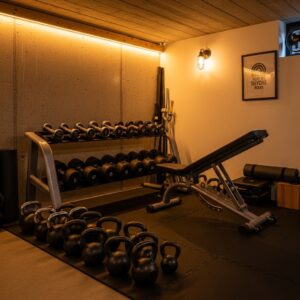
Strength training is a vital component of fitness, and even a small basement can accommodate it.
A compact dumbbell rack, adjustable bench, and a few kettlebells are sufficient for a full-body strength routine.
Positioning these items in one corner ensures they are easily accessible while leaving space for cardio or stretching.
5. Optimize Lighting with LED Fixtures
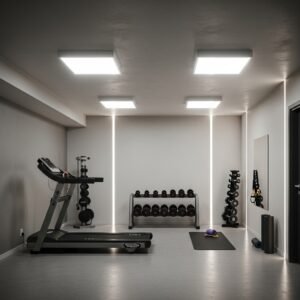
Basements typically have limited windows, so artificial lighting is essential.
Bright LED ceiling lights or strip lighting along walls can illuminate the space effectively.
Adjustable or dimmable lights allow for a more relaxed atmosphere during stretching or yoga sessions and a high-energy environment for intense workouts.
6. Incorporate Rubber Flooring
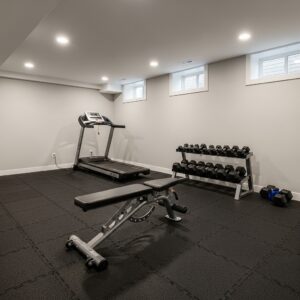
Proper flooring is critical for any gym, especially in a basement where concrete floors can be hard and cold.
Rubber mats provide cushioning, reduce noise, and protect both the floor and equipment.
Interlocking rubber tiles are ideal because they are easy to install and can be customized to fit the exact dimensions of the room.
7. Incorporate a Stretching and Yoga Area
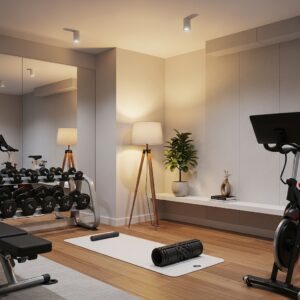
Even in a small basement, a dedicated area for stretching, yoga, or bodyweight exercises is essential.
A yoga mat, foam roller, and small storage basket for accessories provide a complete setup.
Adding calming elements such as a small indoor plant or soft lighting can make the area a relaxing retreat within the gym.
8. Use a Neutral and Calming Color Palette
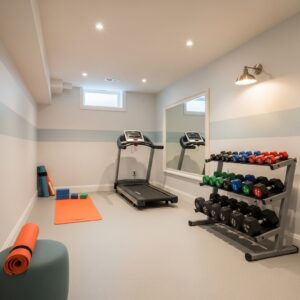
Choosing light or neutral colors for walls and floors can make a basement gym feel larger and more inviting.
Shades such as light gray, soft white, or beige reflect light better, reducing the cave-like feeling that basements often have.
Accents of bold colors, such as red or blue, can be added through equipment or decor to energize the space.
9. Consider Adjustable Wall-Mounted Pull-Up Bars
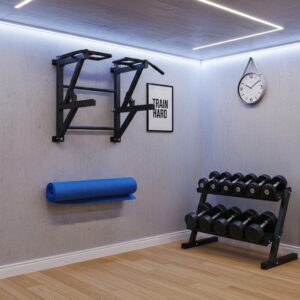
Pull-up bars are highly effective for upper-body workouts and can be installed on basement walls without occupying floor space.
Adjustable or foldable designs are particularly suitable for small basements, as they allow the bar to be moved or folded when not in use, maintaining flexibility and safety.
10. Add a Wall-Mounted TV or Sound System
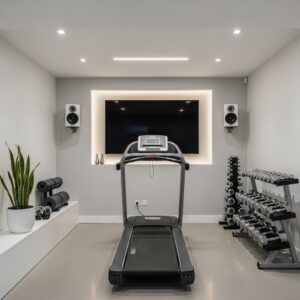
Entertainment can enhance workout motivation.
Installing a wall-mounted television, smart display, or sound system allows users to follow workout videos, stream music, or watch programs during cardio sessions.
Keeping electronics mounted on walls rather than on furniture saves valuable floor space and maintains safety.
11. Optimize Ventilation and Airflow
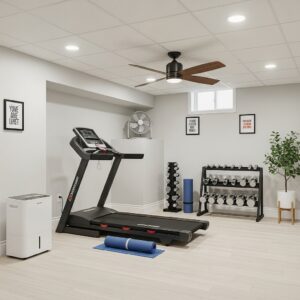
Basements can become stuffy during workouts, so proper ventilation is crucial.
A combination of ceiling fans, small portable fans, or a dehumidifier ensures fresh air circulation and prevents moisture buildup.
Well-ventilated spaces reduce the risk of mold and create a more comfortable workout environment.
12. Incorporate Wall-Mounted Storage Solutions
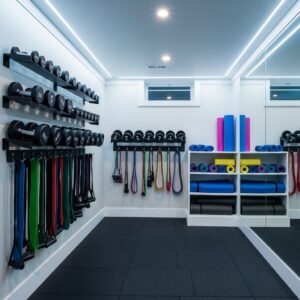
In a basement gym, floor space is valuable.
Wall-mounted racks, hooks, and shelves can store dumbbells, resistance bands, yoga mats, and other small equipment efficiently.
Vertical storage keeps the area tidy, ensures easy access to equipment, and prevents clutter from making the basement feel cramped.
13. Create a Functional Cardio Corner
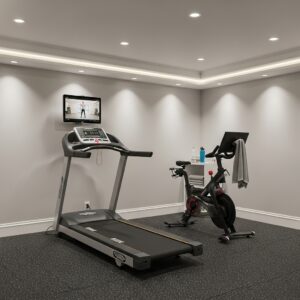
Even in a small basement, a dedicated cardio corner can be established.
A treadmill, stationary bike, or elliptical can be placed against a wall, paired with a wall-mounted TV or tablet for entertainment during workouts.
Positioning cardio machines near the room’s entrance or under available lighting can help maintain a lively and energetic environment.
14. Use Inspirational Decor and Motivational Elements
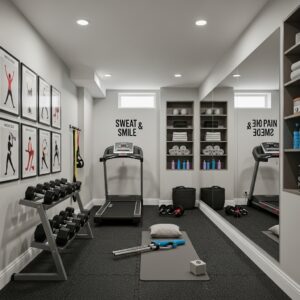
Even a small basement gym can be visually stimulating with the right decor.
Wall decals, motivational quotes, or framed fitness posters add personality and encourage consistency.
Bright or reflective elements can also enhance lighting, making the space appear more dynamic and uplifting.