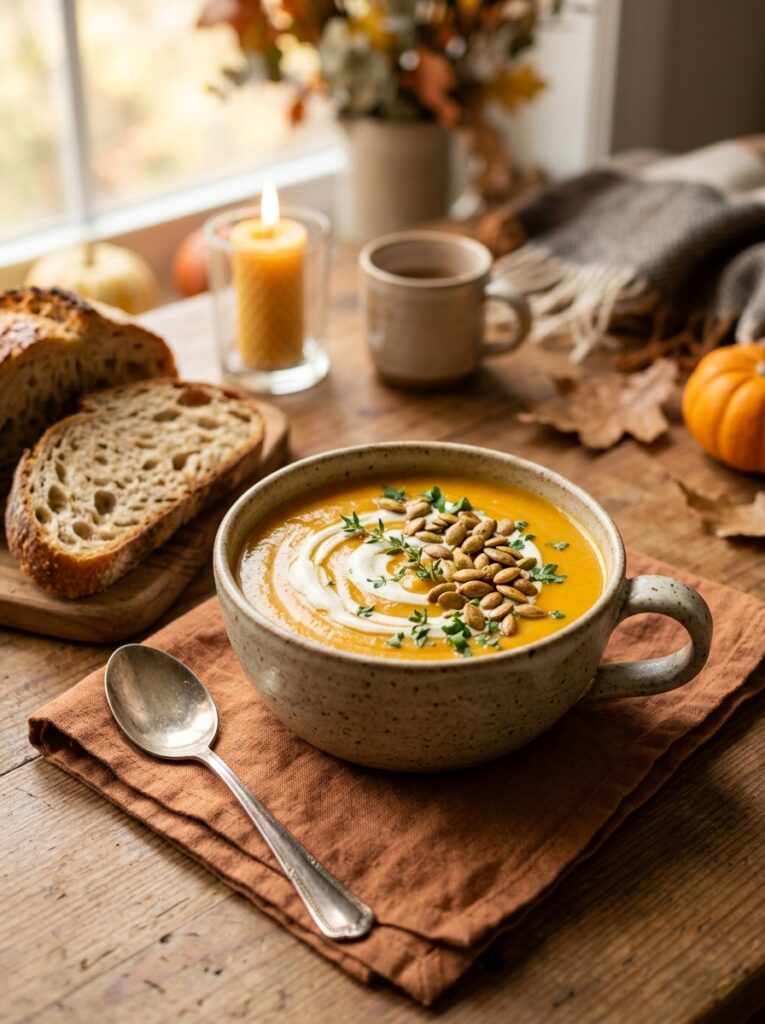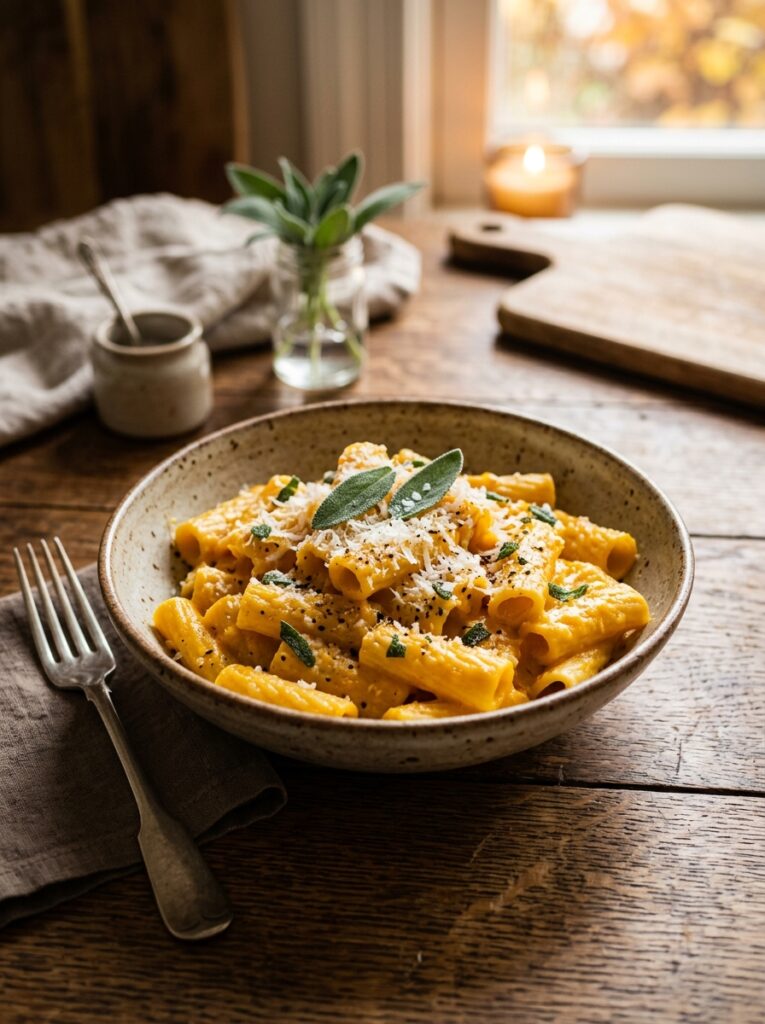
When the weather starts to cool down, there is nothing quite as comforting as a warm bowl of creamy pasta. This Creamy Butternut Squash Pasta Recipe combines tender pasta with roasted butternut squash, garlic, Parmesan cheese, and simple seasonings to create a rich and comforting meal that feels special without requiring complicated ingredients.
The butternut squash gives the sauce a naturally creamy texture and a subtle sweetness, while garlic, Parmesan, and herbs add savory flavor. Instead of relying on a heavy cream-based sauce alone, the blended squash creates a smooth and velvety consistency that coats every piece of pasta beautifully.
This recipe is perfect for a cozy fall dinner, a quick family meal, or a comforting weekend lunch. It can also be customized with your favorite pasta shape, extra vegetables, crispy toppings, or cooked chicken.
Why You’ll Love This Creamy Butternut Squash Pasta

There are plenty of reasons to add this recipe to your fall dinner rotation.
It is creamy and comforting. The blended butternut squash creates a naturally smooth sauce that makes the pasta rich and satisfying.
It uses simple ingredients. You only need a handful of everyday ingredients to make the sauce flavorful and delicious.
It is perfect for fall. Butternut squash, garlic, Parmesan, and herbs create a warm combination that works especially well during the cooler months.
It is easy to customize. You can add spinach, mushrooms, chicken, sausage, or roasted vegetables depending on what you have available.
It works for busy weeknights. Much of the preparation can be done while the squash is roasting and the pasta is cooking.
Ingredients for Creamy Butternut Squash Pasta
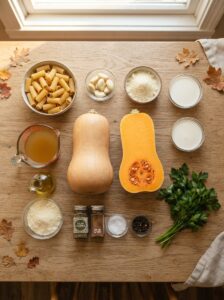
Butternut Squash
Butternut squash is the main ingredient in the sauce. When roasted, it becomes tender and develops a naturally sweet, slightly caramelized flavor. Once blended, it gives the sauce a smooth and creamy consistency.
You can use fresh butternut squash that has been peeled and cubed. If you want to save preparation time, pre-cut butternut squash can also work well.
Pasta
Choose a pasta shape that can hold onto the creamy sauce. Penne, rigatoni, fusilli, shells, and fettuccine are all good options.
For this recipe, regular pasta works perfectly, but whole-wheat or gluten-free pasta can also be used depending on your preferences.
Garlic
Fresh garlic gives the butternut squash sauce a savory flavor that balances the natural sweetness of the squash. Roasting the garlic along with the squash makes its flavor softer and slightly sweeter.
Olive Oil
Olive oil helps roast the squash and garlic while adding richness to the finished sauce.
Parmesan Cheese
Parmesan adds saltiness, nuttiness, and extra creaminess. Freshly grated Parmesan melts especially well into the warm sauce.
Vegetable Broth
Vegetable broth helps thin the blended squash into a smooth pasta sauce while adding additional savory flavor.
Heavy Cream
A small amount of heavy cream gives the sauce an extra silky texture. You can adjust the amount depending on how rich and creamy you want the pasta to be.
Seasonings
Simple seasonings such as salt, black pepper, Italian seasoning, and a pinch of nutmeg complement the sweet and savory flavors of the butternut squash.
How to Make Creamy Butternut Squash Pasta

1. Prepare the Butternut Squash
Start by preheating your oven to 400°F (200°C).
Peel the butternut squash and cut it into small, evenly sized cubes. Keeping the pieces similar in size helps them roast evenly.
Place the squash on a large baking sheet. Add the garlic cloves and drizzle everything with olive oil. Season with salt, black pepper, and Italian seasoning.
Spread the squash into a single layer so the pieces have enough space to roast rather than steam.
2. Roast the Squash and Garlic
Roast the squash for approximately 25–35 minutes, or until it becomes fork-tender and lightly caramelized around the edges.
The exact cooking time will depend on the size of your squash pieces. Larger cubes may need additional time.
Once the squash is tender, remove it from the oven and allow it to cool slightly before blending.
3. Cook the Pasta
While the squash is roasting, bring a large pot of salted water to a boil.
Add your pasta and cook according to the package directions until al dente.
Before draining the pasta, reserve about 1 cup of pasta water. This starchy water can help loosen the sauce and make it cling beautifully to the pasta.
Drain the pasta and set it aside.
4. Blend the Butternut Squash Sauce
Add the roasted butternut squash and garlic to a blender or food processor.
Pour in the vegetable broth and heavy cream. Add Parmesan cheese, black pepper, and a small pinch of nutmeg.
Blend until the mixture becomes completely smooth and creamy.
If the sauce seems too thick, add a little more vegetable broth or reserved pasta water until you reach your preferred consistency.
5. Warm the Sauce
Pour the blended sauce into a large skillet or saucepan over medium-low heat.
Warm the sauce gently for several minutes, stirring occasionally.
Avoid boiling the sauce vigorously because excessive heat can cause the dairy ingredients to separate.
Taste the sauce and adjust the salt, pepper, or seasonings as needed.
6. Combine the Pasta and Sauce
Add the cooked pasta directly to the skillet with the butternut squash sauce.
Toss everything together until the pasta is completely coated.
If the sauce is too thick, add reserved pasta water one tablespoon at a time until it reaches a smooth, creamy consistency.
The starch from the pasta water helps the sauce cling to the noodles instead of sitting at the bottom of the bowl.
7. Add the Finishing Touches
Once the pasta is coated in the sauce, stir in a little extra Parmesan cheese if desired.
For a beautiful finishing touch, garnish each serving with freshly grated Parmesan, cracked black pepper, chopped parsley, or a sprinkle of fresh herbs.
You can also add toasted pumpkin seeds for a little crunch.
Tips for Making the Best Creamy Butternut Squash Pasta
Cut the squash evenly. Similar-sized pieces will roast at roughly the same rate, preventing some pieces from becoming overcooked while others remain firm.
Do not overcrowd the baking sheet. Give the squash enough room to roast properly. Overcrowding can trap moisture and prevent the edges from becoming lightly caramelized.
Reserve pasta water. This is one of the easiest ways to adjust the consistency of the sauce. The starch also helps the sauce adhere to the pasta.
Use freshly grated Parmesan. Freshly grated cheese generally melts more smoothly than pre-shredded Parmesan.
Taste before serving. Butternut squash can vary in sweetness, so taste the sauce after blending and adjust the salt and seasonings to balance the flavors.
Do not overcook the pasta. Cooking the pasta until al dente gives the finished dish a better texture, especially after it is tossed with the hot sauce.
What Pasta Is Best for Butternut Squash Sauce?
Several pasta shapes work well with this creamy sauce.
Penne is an excellent choice because the sauce coats both the outside and inside of the pasta tubes.
Rigatoni works particularly well when you want a hearty, substantial pasta dish.
Fusilli has twists that hold onto plenty of creamy sauce.
Shell pasta is another great option because the sauce collects inside the shells.
Fettuccine creates a classic creamy pasta experience and works beautifully with the smooth butternut squash sauce.
Ultimately, you can use whichever pasta you already have in your pantry.
Can You Add Protein?
Yes. This pasta can easily be turned into a more substantial meal by adding your favorite cooked protein.
Grilled or roasted chicken works particularly well because its savory flavor contrasts nicely with the slightly sweet squash sauce.
Cooked Italian-style sausage can also add a richer, more savory flavor.
For a meat-free option, white beans or crispy chickpeas can provide additional protein and texture.
If adding cooked protein, prepare it separately and stir it into the pasta just before serving.
Vegetables You Can Add
This recipe is also easy to customize with vegetables.
Baby spinach can be stirred into the warm sauce during the final few minutes of cooking. The heat will soften the spinach without requiring much additional preparation.
Sautéed mushrooms add an earthy flavor that pairs nicely with butternut squash.
Roasted broccoli can provide a pleasant contrast to the creamy sauce.
You can also add caramelized onions for a deeper savory flavor.
How to Make It Dairy-Free
To make this recipe dairy-free, replace the heavy cream with an unsweetened dairy-free cream alternative or additional vegetable broth.
Instead of Parmesan, you can use a dairy-free Parmesan-style cheese or nutritional yeast.
Make sure the pasta you choose is also dairy-free if you need the entire dish to avoid dairy.
How to Make It Vegetarian
The basic recipe can be vegetarian as long as you use vegetable broth.
For an even heartier vegetarian meal, add sautéed mushrooms, spinach, roasted broccoli, or crispy chickpeas.
You can also serve the pasta with a simple green salad and crusty bread for a complete dinner.
How to Store Leftover Butternut Squash Pasta
Allow leftovers to cool before transferring them to an airtight container.
Store the pasta in the refrigerator and enjoy it within 3–4 days.
The sauce may become thicker after refrigeration. When reheating, add a small splash of vegetable broth, milk, cream, or water and gently warm the pasta while stirring.
This helps restore some of the sauce’s original creamy consistency.
Can You Freeze Butternut Squash Pasta Sauce?
Yes, the butternut squash sauce can be prepared ahead and frozen.
For the best texture, consider freezing the sauce separately from the pasta. Allow the sauce to cool completely before placing it in a freezer-safe container.
When ready to use it, thaw the sauce in the refrigerator and reheat it gently in a saucepan. Add a little broth or pasta water to loosen it if necessary.
Freshly cooked pasta can then be tossed with the reheated sauce.
What to Serve With Creamy Butternut Squash Pasta
This pasta is satisfying on its own, but a few simple side dishes can turn it into a complete meal.
A crisp green salad provides freshness and contrast to the creamy pasta.
Roasted vegetables such as broccoli, Brussels sprouts, or carrots make excellent seasonal sides.
Warm garlic bread or crusty bread is also delicious for soaking up any extra sauce.
For a lighter meal, serve a smaller portion of pasta alongside a simple salad dressed with lemon and olive oil.
Frequently Asked Questions
Can I use frozen butternut squash?
Yes. Frozen butternut squash can be a convenient alternative to fresh squash. Roast or cook it according to the package directions until tender before blending it into the sauce.
Can I make the sauce ahead of time?
Yes. The butternut squash sauce can be prepared ahead and stored in the refrigerator. When you’re ready to make the pasta, gently reheat the sauce and toss it with freshly cooked pasta.
Why is my sauce too thick?
If your sauce is too thick, gradually add reserved pasta water or vegetable broth while stirring until it reaches the desired consistency.
Why does my pasta sauce taste too sweet?
The sweetness comes naturally from the butternut squash. If the flavor is too sweet for your preference, add more Parmesan, salt, black pepper, garlic, or a small amount of lemon juice to create more balance.
Can I use milk instead of heavy cream?
Yes. Milk can be used for a lighter sauce, although the finished pasta may not be quite as rich or thick. You can adjust the consistency with Parmesan cheese and reserved pasta water.
Can I make this recipe without a blender?
A blender or food processor gives the smoothest sauce, but you can mash the cooked squash very thoroughly with a potato masher. The resulting sauce will have a more rustic texture.
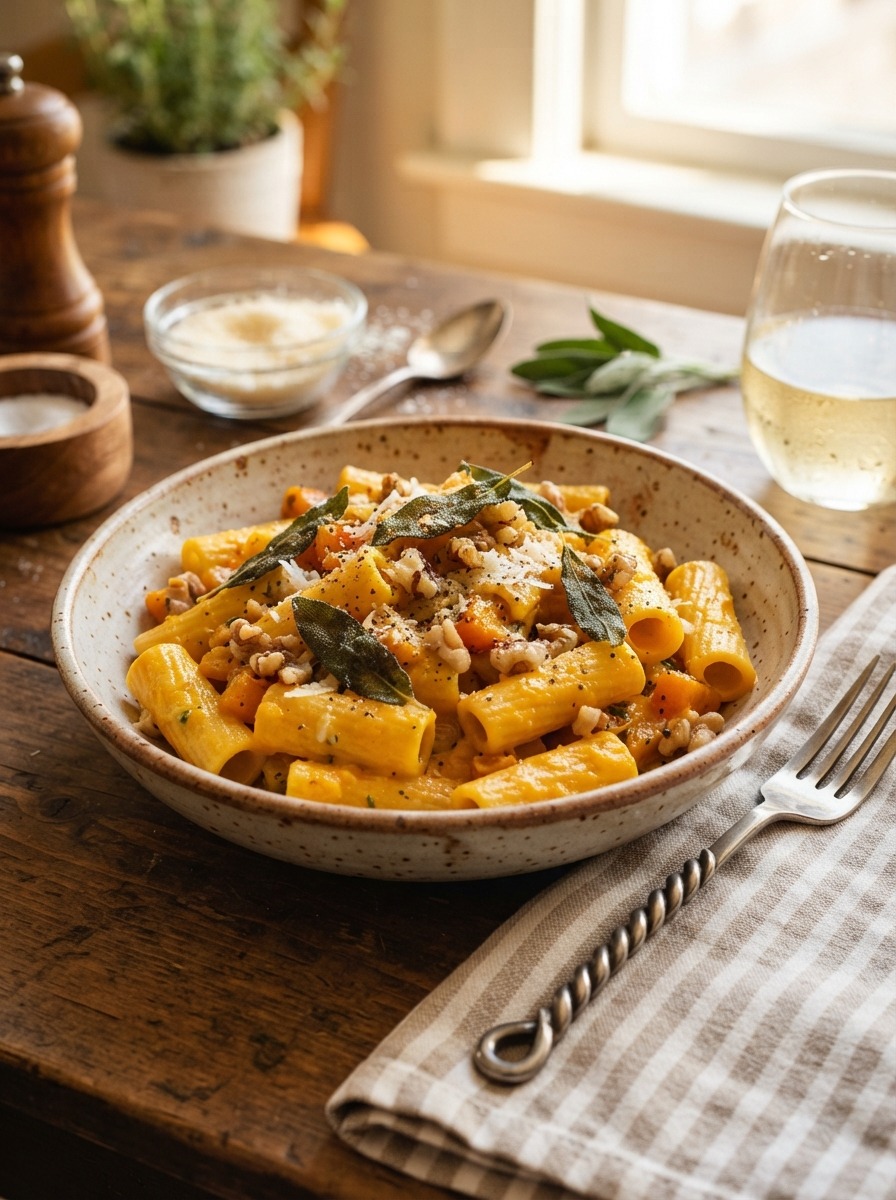
Creamy Butternut Squash Pasta Recipe
Ingredients
Method
- Preheat the oven: Preheat your oven to 400°F (200°C).
- Prepare the squash: Peel and cut the butternut squash into evenly sized cubes. Place the squash and garlic cloves on a large baking sheet.
- Season: Drizzle with olive oil and sprinkle with Italian seasoning, salt, and black pepper. Toss until evenly coated.
- Roast: Roast for 25–35 minutes, or until the squash is fork-tender and lightly browned around the edges.
- Cook the pasta: Bring a large pot of salted water to a boil. Cook the pasta according to the package directions until al dente.
- Reserve pasta water: Before draining, reserve about 1/2 cup of pasta water. Drain the pasta and set aside.
- Blend the sauce: Add the roasted squash and garlic to a blender. Add vegetable broth, heavy cream, Parmesan cheese, nutmeg, and black pepper. Blend until smooth and creamy.
- Warm the sauce: Pour the sauce into a large skillet over medium-low heat. Warm gently for several minutes, stirring occasionally.
- Combine: Add the cooked pasta and toss until thoroughly coated in the creamy squash sauce.
- Adjust the consistency: Add reserved pasta water, one tablespoon at a time, if the sauce is too thick.
- Serve: Taste and adjust the seasoning. Garnish with fresh parsley, extra Parmesan, and cracked black pepper before serving.
Notes
- Cut the squash into evenly sized cubes for even roasting.
- Avoid overcrowding the baking sheet.
- Reserve pasta water to adjust the sauce consistency.
- Freshly grated Parmesan gives the sauce a smoother texture.
- Add spinach, mushrooms, broccoli, chicken, or sausage for variations.
- Refrigerate leftovers in an airtight container for 3–4 days.
- Add a splash of broth, milk, or water when reheating.
This Creamy Butternut Squash Pasta Recipe is a comforting way to enjoy one of fall’s most delicious vegetables. Roasted butternut squash, garlic, Parmesan, herbs, and creamy ingredients come together to create a smooth sauce that coats every bite of pasta.
It is simple enough for a weeknight dinner but cozy enough for a weekend meal. You can keep it vegetarian, add chicken or sausage, mix in your favorite vegetables, or adjust the sauce to suit your preferences.
Serve it warm with Parmesan and fresh herbs, and you have an easy fall-inspired pasta dinner that the whole family can enjoy.