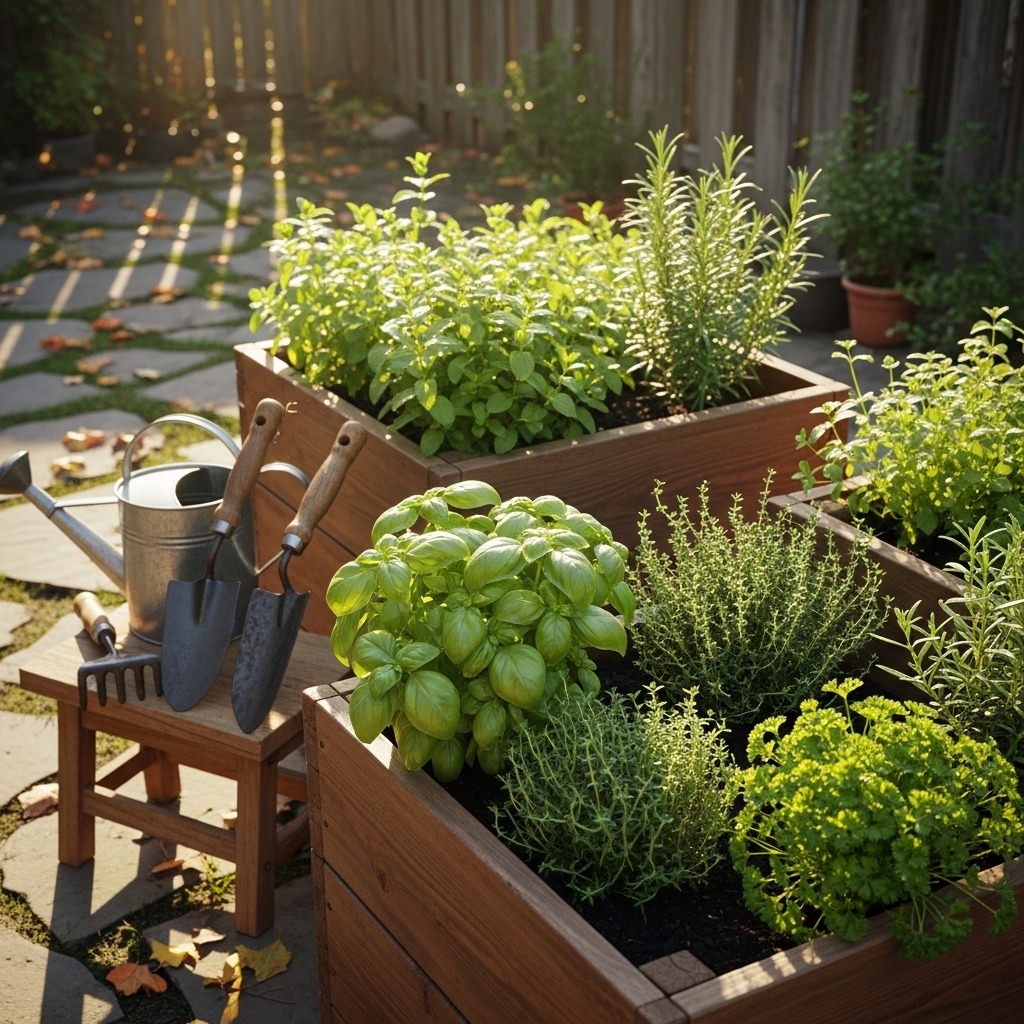
Introducing infants to gardening is a wonderful way to help them explore the world through sight, touch, sound, and smell.
Even though babies are too young to garden independently, they can still enjoy simple, safe activities that let them experience nature in a fun and sensory-rich way.
Gardening with infants encourages curiosity, supports early development, and creates special bonding time between babies and caregivers.
The key is to choose activities that are gentle, supervised, and appropriate for little hands.
1. Touch and Feel Different Leaves

One of the easiest gardening activities for infants is letting them touch and explore different types of leaves.
Gather a variety of safe, non-toxic leaves with different textures, such as soft lamb’s ear, smooth basil leaves, or rough sage.
Sit with your baby outdoors and gently place the leaves in front of them to touch.
Talk about how each leaf feels by using words like “soft,” “bumpy,” “smooth,” or “fuzzy.”
This simple activity helps infants develop their sense of touch while becoming familiar with the natural world.
2. Smell Fresh Herbs
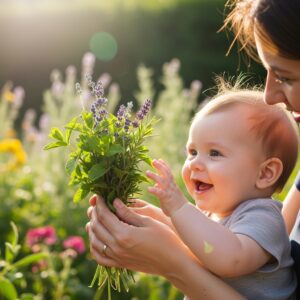
Fresh herbs are perfect for introducing infants to new scents.
Hold herbs such as mint, lavender, rosemary, or basil near your baby’s nose and let them smell each one.
Watch their reactions as they notice the different fragrances.
You can describe the scents in simple ways, such as “mint smells fresh” or “lavender smells sweet.”
Smelling herbs encourages sensory exploration and can even be calming for some babies.
Always make sure the herbs are safe and keep them out of your infant’s mouth.
3. Sit on a Blanket in the Garden

A relaxing activity for infants is simply spending time outdoors on a soft blanket in the garden.
Spread a large blanket in a shady spot and let your baby sit or lie down while they look around.
They may enjoy watching leaves move in the wind, listening to birds, or looking at colorful flowers.
You can place a few safe gardening items nearby, such as a soft watering can or a plastic flower pot, for them to hold.
This activity gives infants a peaceful introduction to the garden without requiring much setup.
Also check: 15 Gardening Activities for Kindergarten
4. Explore Flower Colors

Bright flowers naturally attract a baby’s attention.
Walk around the garden with your infant and point out flowers in different colors.
Show them red roses, yellow sunflowers, purple lavender, or white daisies.
As you hold your baby, talk about the colors and encourage them to look closely at the petals.
This activity supports early visual development because infants are often fascinated by bright, bold colors.
It also helps build language skills as they begin to hear color names repeatedly.
5. Let Them Splash with Water

Many infants enjoy water play, so a simple gardening-themed water activity can be lots of fun.
Fill a shallow bowl or small tub with a little water and place a few floating leaves or flower petals inside.
Let your baby splash gently with their hands while sitting safely nearby.
You can also let them hold a tiny plastic watering can and help you water plants together.
Supervised water play keeps infants entertained and helps them develop hand-eye coordination.
Also check: 15 Gardening Activities for Preschoolers
6. Create a Nature Basket
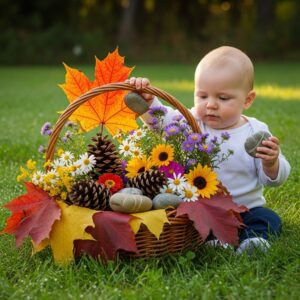
A nature basket is a safe collection of garden items for infants to explore.
Fill a small basket with large leaves, smooth stones, pinecones, flowers, and other natural objects that are too large to swallow.
Sit with your baby and let them take the objects out one at a time.
They can touch, hold, and examine the different textures and shapes.
This activity is simple, but it encourages sensory development and curiosity.
Be sure to supervise closely so your baby does not put small objects into their mouth.
7. Listen to Garden Sounds

The garden is full of interesting sounds that infants often enjoy hearing.
Sit quietly with your baby and listen together to birds chirping, bees buzzing, leaves rustling, or water trickling from a hose.
You can point out each sound and say things like, “Do you hear the bird?” or “Listen to the wind.”
Babies learn a lot by listening, and this calm activity helps them become more aware of the world around them.
8. Help Plant Large Seeds
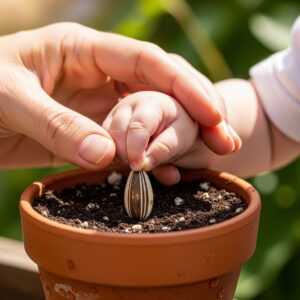
Although infants cannot plant on their own, they can still participate in a simple way.
Choose large seeds such as beans, peas, or sunflower seeds because they are easier to hold.
Sit with your baby and guide their hand as you place a seed into the soil together.
Then gently cover it with dirt.
Even though your infant may not fully understand what is happening, they will enjoy the experience of touching the soil and being involved in the activity.
9. Explore Safe Garden Textures
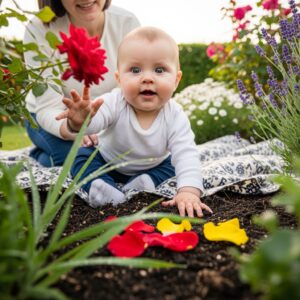
Gardens are full of interesting textures that babies love to explore.
Let your infant feel soft grass, smooth flower petals, cool soil, or a textured tree trunk.
You can place different textures in front of them one at a time and describe what they are touching.
This type of sensory play supports brain development and helps babies learn about the differences between objects.
Make sure all surfaces are clean and safe before your baby touches them.
10. Read a Garden-Themed Book Outside

Bring a board book about flowers, insects, or gardens outside and read it while sitting with your infant in the yard.
Reading outdoors makes the experience more exciting because your baby can see the real plants and objects mentioned in the story.
If the book talks about a flower, point to a flower nearby.
If it shows a butterfly, look around to see if you can spot one together.
Combining books with real-life experiences helps infants make connections and supports early language development.
11. Watch Butterflies and Bees

Infants are often fascinated by movement, making butterflies and bees interesting to watch from a safe distance.
Sit with your baby near flowers that attract pollinators and point out the insects as they move from flower to flower.
You can say simple phrases such as “The butterfly is flying” or “The bee is on the flower.”
Watching insects helps babies learn to focus and observe their surroundings.
Keep your infant safely away from bees and other insects at all times.
Also check: 15 Gardening Activities for Children
12. Make Handprint Garden Art

Create a simple keepsake by making handprint art with your infant after spending time in the garden.
Use non-toxic paint to make your baby’s handprint on paper, then decorate it with flower drawings or leaf shapes.
You could turn the handprint into a flower by drawing a stem and petals around it.
This activity combines creativity with gardening memories and gives you a special reminder of your child’s early experiences.
13. Roll a Ball on the Grass
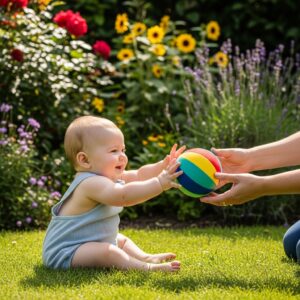
A gardening activity does not always have to involve plants directly.
Roll a soft ball back and forth with your infant while sitting outside in the garden.
They may enjoy reaching for the ball, watching it move, or crawling after it.
The fresh air and natural setting make this simple game feel more exciting.
It also helps build motor skills and encourages movement.
14. Explore a Mini Sensory Garden
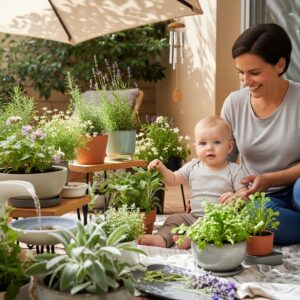
You can create a tiny sensory garden just for your infant by placing a few safe plants in containers at their level.
Include fragrant herbs, colorful flowers, and soft plants with interesting textures.
Sit beside your baby and help them gently touch and smell each plant.
A small sensory garden is especially helpful if you do not have a large yard because it can fit on a patio or balcony.
15. Watch a Plant Grow Together
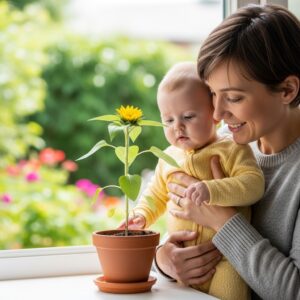
Choose a fast-growing plant, such as a bean or sunflower, and let your infant watch it grow over time.
Place the plant near a window or in the garden and show it to your baby every few days.
Point out how the sprout gets taller or how new leaves appear.
Even though infants are very young, they enjoy seeing changes and new things.
This activity can become a special routine that you share together.
Also check: 14 Gardening Activities for Seniors
Gardening activities for infants should always be simple, safe, and focused on sensory exploration.
Babies do not need to dig or plant in complicated ways to enjoy the garden.
By touching leaves, smelling herbs, watching flowers, and listening to nature, infants can begin to develop an early love for the outdoors.
Most importantly, these activities create meaningful moments between babies and caregivers while helping little ones learn and grow.